
Tag: editor’s pick
-

The Value of a Pip in Calories
Read more → : The Value of a Pip in CaloriesThis essay traces the journey of a single pip in the forex market through economic systems, corporate pricing, labour markets, and finally into the human body. It argues that financial micro-movements are not abstract they metabolise into calories on the dinner table, into burnout, into…
-

The Cross, the Coin, and the Chain
Read more → : The Cross, the Coin, and the ChainHow forced labour and missionary influence converged to build the architecture of colonial Africa.
-

From Chains to Currencies
Read more → : From Chains to CurrenciesA philosophical reflection on how the logic of colonial extraction evolved into modern financial dominance after the Nixon Shock.
-
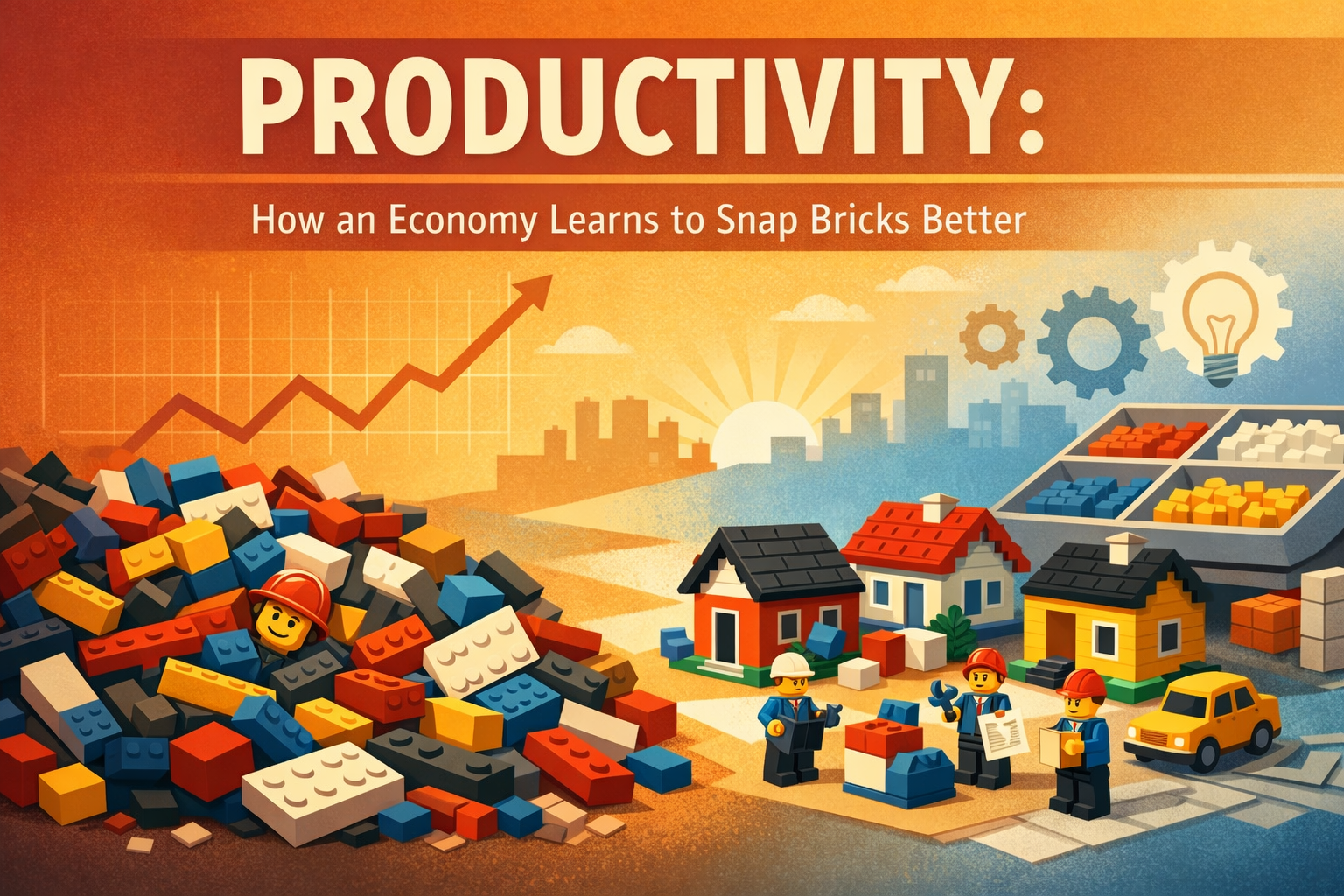
Productivity: How an Economy Learns to Snap Bricks Better
Read more → : Productivity: How an Economy Learns to Snap Bricks BetterAn economic exploration of productivity using LEGO as a restrained metaphor for efficiency, leverage, and long-term wealth creation.
-

Money: Abstraction of Control or Prototype of Power?
Read more → : Money: Abstraction of Control or Prototype of Power?Money is often treated as neutral and technical, but its deeper function is ambiguous. Is money an abstraction of control, quietly narrowing behaviour? Or is it a prototype of power, an early model of the capacity to shape reality? This essay explores how money disciplines…
-

Guilt – When conscience guides, when it corrodes, and when it is no longer yours.
Read more → : Guilt – When conscience guides, when it corrodes, and when it is no longer yours.Guilt is often mistaken for virtue, but it is merely a signal. This essay explores what guilt actually is, how it differs from shame, why some guilt heals while other guilt imprisons, and how inherited, projected, and engineered guilt distort conscience.