
Author: ekelola

  • From Shadow to Illumination: The Hero’s Journey in Yoruba Ifá Cosmology

    From Shadow to Illumination: The Hero’s Journey in Yoruba Ifá Cosmology

    Spread the love

    From Shadow to Illumination: The Hero’s Journey in Yoruba Ifá Cosmology


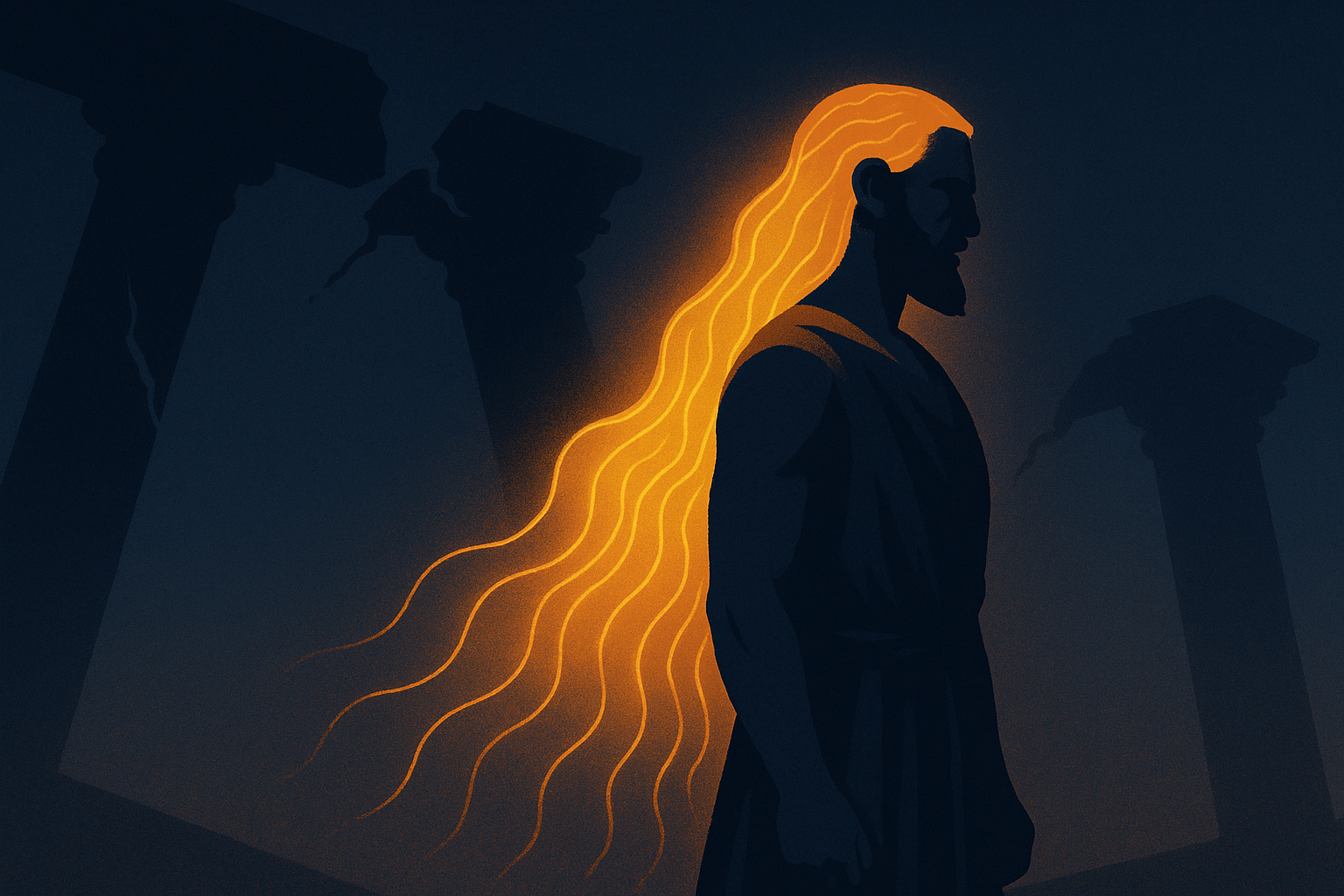
    1. Masculinity as Alignment, Not Domination

    In Western myth, the hero conquers.
    In Yoruba Ifá, the hero aligns.

    The journey of a man in Ifá is not about domination or hierarchy — it is about harmonizing energy with purpose.
    Masculinity is seen not as control, but as functional balance between force and consciousness, between Àṣẹ (power) and Ìwà (character).

    To be masculine in Ifá is to become useful to creation.
    The mature man is not a king who commands; he is an axis through which divine energy moves in balance with the cosmos.
    His greatness lies not in subjugating others but in becoming transparent to divine order.

    “Ifá does not treat masculinity as domination or hierarchy but as alignment, balance, and functionality.”

    Power is never absolute in Ifá — it is relational.
    Àṣẹ flows through all things, and its ethical use depends on Ìwà (character).
    Without Ìwà, Àṣẹ becomes chaos.
    Without humility, power becomes noise.

    Thus, the hero’s journey begins not in conquest, but in disruption — when the harmony between Àṣẹ and Ìwà breaks.


    2. The Descent: Encountering the Shadow Masculine

    In Ifá, shadow (ojiji) is not condemned — it is divine misalignment.
    Every Òrìṣà, no matter how luminous, casts a shadow when its energy is misused.

    Shadow Expression Archetypal Distortion Lesson
    Rage without justice Distorted Ṣàngó Charisma without restraint destroys.
    Innovation without ethics Distorted Ògún Progress without humility leads to ruin.
    Knowledge without compassion Distorted Òrúnmìlà Wisdom without empathy is tyranny.
    Trickery without balance Distorted Èṣù Cleverness without conscience becomes deceit.
    Control without surrender Distorted Ọbàtálá Order without mercy becomes oppression.

    The shadow masculine in Ifá is not evil — it is Àṣẹ misapplied.
    It is power disconnected from reverence.
    These distortions reveal the cost of energy without awareness — the hero’s first encounter with his own chaos.

    The shadow is divine because it teaches correction.
    When the hero falls, Ifá does not condemn him — it initiates him.


    3. The Initiation: Learning through Disruption

    The fall from harmony is the beginning of wisdom.
    Òrúnmìlà teaches that there is no illumination without shadow.

    When the hero misuses Àṣẹ, he must return to Òrúnmìlà — the witness of destiny — to re-learn alignment.
    Through divination, Ifá reminds him that every imbalance has a verse — every fall has a pattern and a path to correction.

    Ògún learns that force without patience breaks the path.
    Ṣàngó learns that thunder without truth destroys its own kingdom.
    Èṣù learns that trickery without purpose breeds confusion.

    “In Ifá, even shadow is divine — it teaches alignment.”

    Through humility, the hero begins to remember:
    All power originates in balance.


    4. The Ascent: The Birth of the Ọmọlúàbí

    After descent and initiation comes transformation — the birth of the Ọmọlúàbí, the noble man who balances power and humility.

    Aspect Description
    Ìwà (Character) Moral integrity; inner peace guiding outward action.
    Ọgbọ́n (Wisdom) Learned discernment; practical understanding.
    Àṣẹ (Power) Creative energy channeled through discipline.
    Ìtẹríba (Respect) Humility before elders, community, and cosmos.
    Ìfẹ́ (Love) Connection and compassion as ultimate strength.

    The Ọmọlúàbí is the redeemed masculine — energy in harmony with consciousness.
    He has faced his shadow and now wields Àṣẹ as service, not ego.
    He is both warrior and sage, creator and servant, leader and student.

    Perfection is not the goal; alignment is.
    He lives in dynamic balance between Òrún (spirit) and Ayé (earth), embodying divine reciprocity.

    “The Ọmọlúàbí is the complete man — disciplined yet gentle, powerful yet humble, wise yet kind.”


    5. The Return: Illumination as Service

    The final act of the hero’s journey is the return — to serve with awareness.
    Having aligned Àṣẹ with Ìwà, the illuminated man no longer seeks dominance but usefulness.

    He becomes a stabilizing presence in his community — the quiet fire around which others find direction.
    Illumination, in Ifá, is not escape from the world but re-integration with it.
    It is the restoration of rhythm — the music of harmony between spirit and matter.

    The hero returns not as ruler, but as servant — the living expression of balance between heaven and earth.


    6. Metaphysical Reflection: The Circle of Ifá

    Ifá teaches that all existence moves in cycles — the circle of Òpón Ifá mirrors the circle of destiny.
    Every journey — fall, learning, transformation, return — completes a loop of awareness.

    The hero’s journey is not linear ascent but spiral awakening.
    Each descent into shadow refines the light; each mistake deepens consciousness.
    Even the Òrìṣà fall and rise — not to prove divinity, but to reveal its living dynamism.

    Illumination in Ifá is not purity — it is rhythm.


    7. Conclusion — Illumination as Balance

    In Yoruba Ifá cosmology, the hero’s journey is not conquest but alignment.
    Masculinity matures not through domination but through Ìwà Pẹ̀lẹ́ — the gentle, disciplined character that allows Àṣẹ to flow rightly.

    To be a man of light is to be a man of rhythm — one who moves with the divine tempo of creation.
    He is not perfect, but balanced.
    Not flawless, but awake.

    “A man is not strong because he conquers others,
    but because he conquers himself through character.”

    — Odu Ifá Ògúndá Méjì
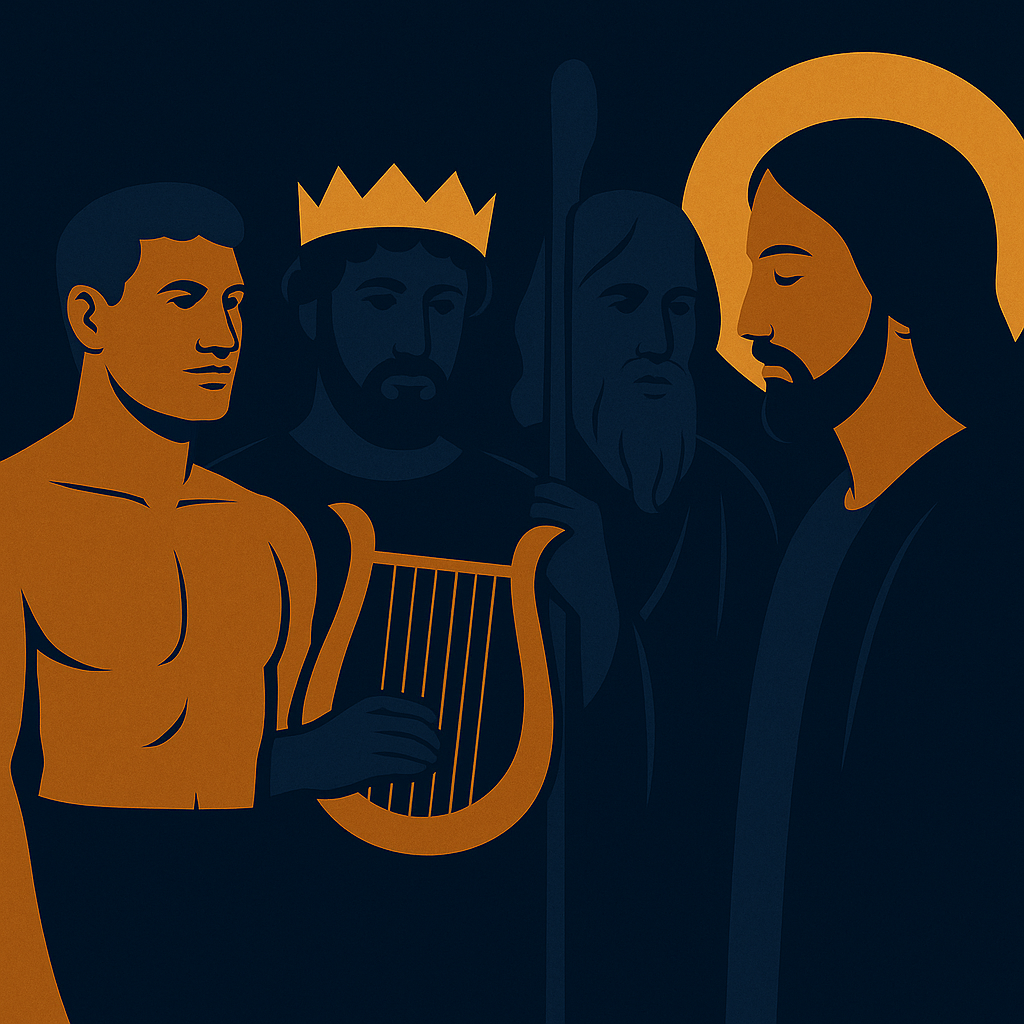
  • The Masculine Archetypes of the Bible: From Adam to Christ

    The Masculine Archetypes of the Bible: From Adam to Christ

    Spread the love

    The Masculine Archetypes of the Bible: From Adam to Christ

    The story of the Bible’s men is not merely history — it is the map of consciousness.
    From Adam’s awakening to Christ’s union, each archetype reflects a stage in the evolution of the sacred masculine — from untested strength to enlightened awareness.

    Where the feminine evolves from creation to wisdom (Eve to Sophia),
    the masculine evolves from innocence to consciousness (Adam to Christ).
    Together they form the two poles of divine wholeness — Will and Wisdom, Strength and Reflection, Action and Awareness.


    ⚒ 1. The Adamic Archetype — Innocence, Will, and the Fall

    Archetype Example Symbolism
    The First Man Adam Innocence before knowledge; the birth of self-awareness through error.
    The Worker / Cultivator Cain & Abel Instinct versus devotion; ego versus offering.
    The Builder Noah Obedience as survival; creation preserved through craftsmanship.

    The Adamic archetype is the beginning of consciousness — the first confrontation between instinct and awareness.


    🜂 2. The Patriarch — Authority, Covenant, and Continuity

    The patriarchs channel masculine energy into structure — family, faith, and legacy.
    Their power lies not in control, but in covenant.

    Archetype Example Symbolism
    The Visionary Patriarch Abraham Faith beyond reason; obedience as transcendence.
    The Trickster Patriarch Jacob (Israel) Transformation through struggle; wrestling with God into identity.
    The Intercessor Patriarch Joseph Wisdom through suffering; divine providence within human betrayal.
    The Protective Patriarch Job Righteousness tested; endurance as revelation.

    The Patriarch learns that authority is stewardship — to lead is to listen.


    ⚔️ 3. The Warrior-King — Courage, Conquest, and Moral Tension

    Here the masculine learns action — will applied to purpose, tested by desire.

    Archetype Example Symbolism
    The Defender of Faith Joshua Courage in obedience; conquest as divine duty.
    The Strongman Samson Power without awareness; downfall through desire.
    The Poet-King David Passion, repentance, and intimacy with God.
    The Wise King Solomon Knowledge corrupted by indulgence; intellect unanchored by discipline.

    The Warrior must conquer himself before he can rule others.


    🕯 4. The Prophet — Vision, Truth, and Rebellion

    The Prophet speaks where others fear to see —
    he embodies the masculine voice in service to truth, even against kings.

    Archetype Example Symbolism
    The Fiery Prophet Elijah Zeal, solitude, and divine confrontation.
    The Mourning Prophet Jeremiah Compassionate truth; lament as strength.
    The Visionary Prophet Ezekiel Divine imagination; transcendence through symbol.
    The Noble Prophet Daniel Integrity under oppression; faith within empire.
    The Forerunner Prophet John the Baptist Purity through renunciation; renewal through preparation.

    The Prophet represents awareness as resistance — the courage to speak truth to power.


    🪶 5. The Priest — Order, Ritual, and Mediation

    The priesthood refines masculine strength into sacred order —
    turning zeal into service and structure into sanctity.

    Archetype Example Symbolism
    The Mediator-Priest Aaron Representation of humanity before God; duty and danger.
    The Zealous Priest Phinehas Devotion through passion; the peril of righteousness without compassion.
    The Eternal Priest Melchizedek Divine order without lineage; timeless mediation.
    The Father-Priest Zechariah Doubt and renewal; silence before revelation.

    The Priest sanctifies form — bringing heaven into structure and ritual into meaning.


    🌾 6. The Shepherd — Humility, Guidance, and Compassion

    Leadership matures into care — the masculine learns empathy through service.

    Archetype Example Symbolism
    The Humble Shepherd Moses Leadership born from exile; humility as power.
    The Singing Shepherd David (before kingship) Spiritual intimacy through solitude and song.
    The Good Shepherd Jesus Christ Sacrifice as love; unity of authority and tenderness.

    The Shepherd transforms power into presence — leading by protecting, ruling by serving.


    🕊 7. The Sage and Mystic — Contemplation, Silence, and Union

    In maturity, the masculine turns inward — discovering that knowing begins where control ends.

    Archetype Example Symbolism
    The Philosopher-King Solomon (Proverbs, Ecclesiastes) The burden of wisdom; the futility of excess.
    The Contemplative Mystic Job (in dialogue with God) Enlightenment through surrender.
    The Visionary Disciple John the Beloved Love as divine perception.
    The Redeemer Archetype Jesus Christ The union of divine and human consciousness — power as compassion.

    The Sage no longer seeks dominion — he seeks understanding.


    ⚖️ 8. The Shadow Masculine — Pride, Violence, and Control

    Every archetype has its distortion — the masculine detached from reflection becomes domination.

    Archetype Example Symbolism
    The Tyrant Pharaoh Power without empathy; blindness to divine law.
    The Betrayer Judas Iscariot Love without loyalty; conscience destroyed by guilt.
    The Oppressor-King Saul Fear masquerading as strength; the erosion of integrity.
    The Skeptic Pontius Pilate Intellect without conviction; cowardice beneath reason.

    The Shadow Masculine is strength unredeemed — the sword without the heart.


    💫 9. The Redeemed Masculine — Integration and Illumination

    The culmination of the masculine journey is not conquest but consciousness —
    the reintegration of power, awareness, and love.

    Archetype Example Symbolism
    The Servant-Leader Jesus of Nazareth Love as law; the meek inheriting the earth.
    The Philosopher-Apostle Paul of Tarsus Transformation of intellect through grace.
    The Faithful Companion John the Apostle Witness of love; steadfast devotion beyond fear.
    The Reconciled Brother Joseph Forgiveness as mastery; peace as divine authority.

    The mature masculine is not invincible but integrated — will surrendered to wisdom, strength guided by love.


    Final Reflection

    The masculine journey of scripture mirrors humanity’s inner evolution:

    • Adam awakens through error.
    • Abraham obeys through faith.
    • David feels through failure.
    • Christ unites through awareness.

    Power begins as instinct and ends as illumination.
    Every man must pass through the sword and the shadow before finding his stillness.

    “The true masculine does not dominate — it aligns.
    It learns that mastery begins not in conquest but in consciousness.”

    — Ekelola Reflections

  • The Feminine Archetypes of the Bible: From Eve to Sophia

    The Feminine Archetypes of the Bible: From Eve to Sophia

    Spread the love

    The Feminine Archetypes of the Bible: From Eve to Sophia

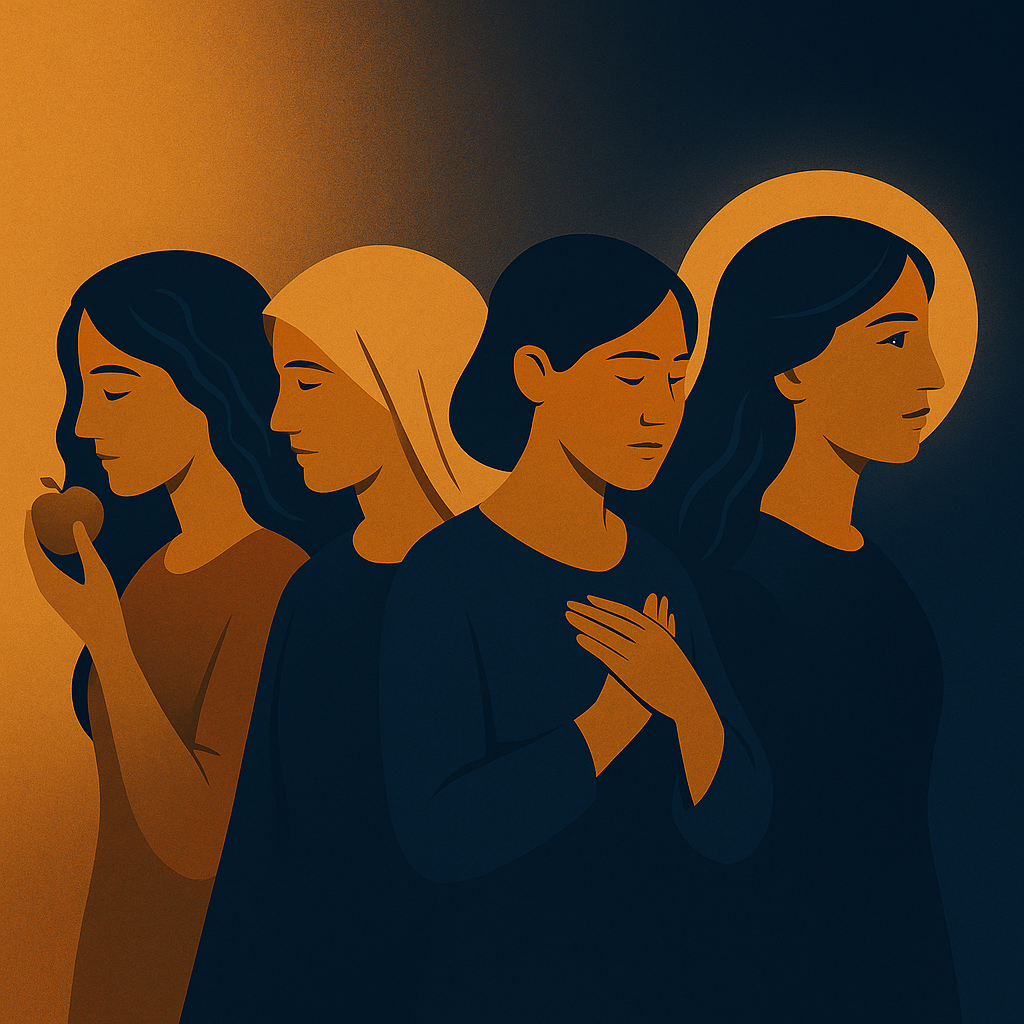
    The women of the Bible are not fragments of history — they are mirrors of the soul’s evolution.
    Across their stories, the feminine unfolds as life, wisdom, desire, justice, and revelation.
    From Eve’s curiosity to Mary’s devotion, from Delilah’s seduction to Sophia’s wisdom, the feminine archetype charts humanity’s movement from innocence through awareness into divine union.


    🕊 1. The Mother Archetype — Nurture, Covenant, and Continuity

    The mother archetype anchors the Bible’s beginning and sustains its covenant.
    She gives life not only biologically but spiritually — carrying faith, lineage, and promise.

    Archetype Example Symbolism
    The Universal Mother Eve Origin and awakening; curiosity as the birth of consciousness.
    The Covenant Mother Sarah Faith through barrenness; promise fulfilled in divine time.
    The Protective Mother Jochebed Maternal courage; preservation of destiny (Moses).
    The Faithful Mother Hannah Devotion through sacrifice; prayer birthing prophecy.
    The Holy Mother Mary (Mother of Jesus) Obedience as co-creation; incarnation of divine will.

    Motherhood in scripture is not biology — it is covenantal consciousness.


    🔥 2. The Prophetess — Vision, Wisdom, and the Voice of Truth

    The Prophetess embodies spiritual intuition — woman as vessel of divine insight.

    Archetype Example Symbolism
    The Deliverer-Prophetess Miriam Leadership through song and courage.
    The Judge-Prophetess Deborah Divine justice through wisdom and warfare.
    The Warrior-Queen Prophetess Jael Righteous cunning; victory through unexpected strength.
    The Temple Prophetess Anna Lifelong devotion and vision fulfilled.
    The Whisperer of Wisdom Abigail Diplomacy as salvation; emotional intelligence as divine intelligence.

    The Prophetess archetype unites intuition and insight — the mind that listens before it speaks.


    🌹 3. The Lover and Seductress — Desire, Manipulation, and Revelation

    Here, the feminine appears as the mirror of passion and vulnerability.
    Desire reveals where consciousness still clings to control.

    Archetype Example Symbolism
    The Seductress Delilah Desire as test; loss of strength through unawareness.
    The Temptress Potiphar’s Wife (Zulaykha) Trial through attraction; exposure of moral integrity.
    The Queen of Allure Bathsheba Beauty as catalyst for transformation and remorse.
    The Pagan Seductress Jezebel Domination of the spiritual by the sensual and ideological.
    The Restored Lover The Woman at the Well Desire transmuted into revelation.

    The Lover archetype mirrors the soul’s hunger — for intimacy, for God, for self.


    👑 4. The Queen and Matriarch — Power, Order, and Influence

    These women govern realms seen and unseen — embodying sovereignty through wisdom and timing.

    Archetype Example Symbolism
    The Royal Matriarch Rebekah Subtle strategy; influence masked as submission.
    The Diplomatic Queen Esther Silence as strength; courage as salvation.
    The Pagan Queen Athaliah Power without grace; rule without alignment.
    The Mother of Kings Bathsheba (as Queen Mother) Redemption through legacy.
    The Royal Intercessor The Shunammite Woman Faith that resurrects; hospitality that births miracles.

    True queenship in scripture is stewardship — power as prayer in motion.


    🌾 5. The Penitent and Redeemed — Transformation and Grace

    These women embody metanoia — the sacred turning from shadow to light.

    Archetype Example Symbolism
    The Redeemed Sinner Mary Magdalene Transformation through love; the feminine as witness of resurrection.
    The Accused Woman The Woman Caught in Adultery Mercy over judgment; awakening through forgiveness.
    The Repentant Harlot Rahab Redemption through faith; salvation beyond stigma.
    The Restored Queen Ruth Loyalty as bridge to divine favor.

    Redemption is not purity restored but awareness integrated.


    ⚖️ 6. The Shadow Feminine — Power, Control, and Consequence

    Shadow arises when divine intelligence is severed from humility — when power seeks autonomy from wisdom.

    Archetype Example Symbolism
    The Idol Queen Jezebel Will to power; the fall of spiritual alignment.
    The Manipulator Herodias Revenge disguised as righteousness.
    The Deceiver Lot’s Daughters Survival through distortion; fear creating moral collapse.
    The False Prophetess “Jezebel” in Revelation 2:20 Corruption of truth through charisma.

    The Shadow Feminine is creation without compassion — wisdom without heart.


    💫 7. The Mystical Feminine — Sophia and the Bride

    Beyond history, the feminine becomes cosmic — wisdom personified.

    Archetype Example Symbolism
    Wisdom (Sophia) Proverbs 8–9 Divine intelligence as feminine essence — the architect of creation.
    The Bride of the Lamb Revelation 21:2 The redeemed soul; union between God and creation.
    Daughter Zion / Jerusalem Isaiah, Jeremiah The collective feminine; beloved, broken, restored.
    The Woman Clothed with the Sun Revelation 12 Cosmic motherhood and divine protection.

    Sophia completes the circle — from Eve’s curiosity to the Bride’s wisdom.


    🜂 8. The Feminine Spectrum in One View

    Axis Archetypes Keywords
    Life & Nurture Eve, Sarah, Hannah, Mary Creation, faith, covenant
    Wisdom & Vision Deborah, Miriam, Abigail Intuition, leadership, revelation
    Desire & Test Delilah, Bathsheba, Potiphar’s Wife Seduction, discernment, awareness
    Power & Order Esther, Rebekah, Jezebel Influence, governance, imbalance
    Transformation Ruth, Mary Magdalene, Rahab Redemption, loyalty, love
    Mystery & Union Sophia, Bride of the Lamb Wisdom, divine integration

    Final Reflection

    The feminine in scripture is not a static symbol — it is a living continuum of consciousness.
    Every woman of the Bible — Eve, Sarah, Delilah, Esther, Mary, Sophia — represents a movement in the soul’s journey from instinct to insight, from separation to union.

    “In every woman of scripture lives an echo of Sophia —
    the wisdom that breaks, reveals, heals, and renews.”

    — Ekelola Reflections

  • The Mirror and the Machine: Male Fragility, Awareness, and the Feminine Test

    The Mirror and the Machine: Male Fragility, Awareness, and the Feminine Test

    Spread the love

    The Mirror and the Machine: Male Fragility, Awareness, and the Feminine Test

    “Her gaze turns men to stone not out of malice, but because it forces them to confront what they deny — the raw, unfiltered power of the sacred feminine.”
    “She does not fight Samson; she draws him in. Her weapon is trust.”


    1. The Feminine as Mirror — Manipulation or Revelation?

    The sacred feminine does not dominate; she reflects.
    Her power appears manipulative only to the eye that fears reflection.
    Where masculine energy moves to shape the world, feminine energy bends it back to awareness.
    She is not a conqueror but a mirror — an amplifier of intention and insecurity alike.

    The so-called manipulation of Delilah or the petrifying gaze of Medusa both arise from the same law:
    whatever is unexamined returns as ordeal.
    The feminine does not punish — she reveals.
    To the unconscious man, this revelation feels like attack, when in truth it is awakening.


    2. Male Fragility and the Crisis of Awareness

    Samson’s undoing is not Delilah’s betrayal; it is his own unawareness.
    His strength is physical but unintegrated, his trust emotional but unguarded.
    He does not fall because he loves; he falls because he confuses surrender with submission.

    Male fragility, then, is strength without reflection — a structure without interiority.
    It manifests as bravado masking confusion, logic avoiding emotion, or dominance compensating for disconnection.
    Such fragility resists the feminine not because she is dangerous, but because she is mirroring truth.

    The unawakened man cannot distinguish between affection and absorption —
    between being loved and being mirrored.

    When awareness enters, fragility transforms into humility.
    He learns that strength is not protection from vulnerability but presence within it.


    3. Ideal Types and the Inner Projection

    Men’s “ideal types” are rarely about appearance — they are psychological blueprints of what the man unconsciously seeks to reclaim in himself.
    The woman he desires often embodies the traits he has exiled: sensitivity, mystery, intuition, surrender.

    He projects the unintegrated feminine onto her — turning her into an ideal or a danger.
    Hence his two archetypal reactions: worship or fear.
    He loves Delilah, he slays Medusa.

    But in truth, both women are parts of him.
    To integrate them is to reunite his logic with his longing — to become whole.


    4. The Hero’s Journey Revisited

    The classical hero’s journey — so often framed as conquest — is, at its deepest level, a journey through the feminine.
    The hero must descend into the underworld of feeling, chaos, and loss — the realm ruled by the goddess.
    He must face both temptation (Delilah) and truth (Medusa) to achieve integration.

    • Delilah draws him inward, teaching discernment through desire.
    • Medusa confronts him outwardly, teaching vision through fear.

    The hero’s failure is not defeat — it is initiation.
    Each wound is a doorway to awareness.
    He returns from the underworld not with trophies but with wholeness.


    5. Liberation: Seeing Without Stone, Loving Without Scissors

    To be liberated is to engage the feminine mirror without collapse —
    to gaze at Medusa without turning to stone, to love Delilah without losing essence.

    This is not resistance but receptivity with awareness.
    It is strength that does not control and vulnerability that does not crumble.
    A liberated man no longer fears being seen — by woman, by mirror, or by truth.

    Strength becomes liberation when it learns to hold tenderness without fear.

    In this space, trust ceases to be a gamble and becomes grace.
    Love ceases to be a battlefield and becomes recognition.


    6. The Machine as Modern Mirror

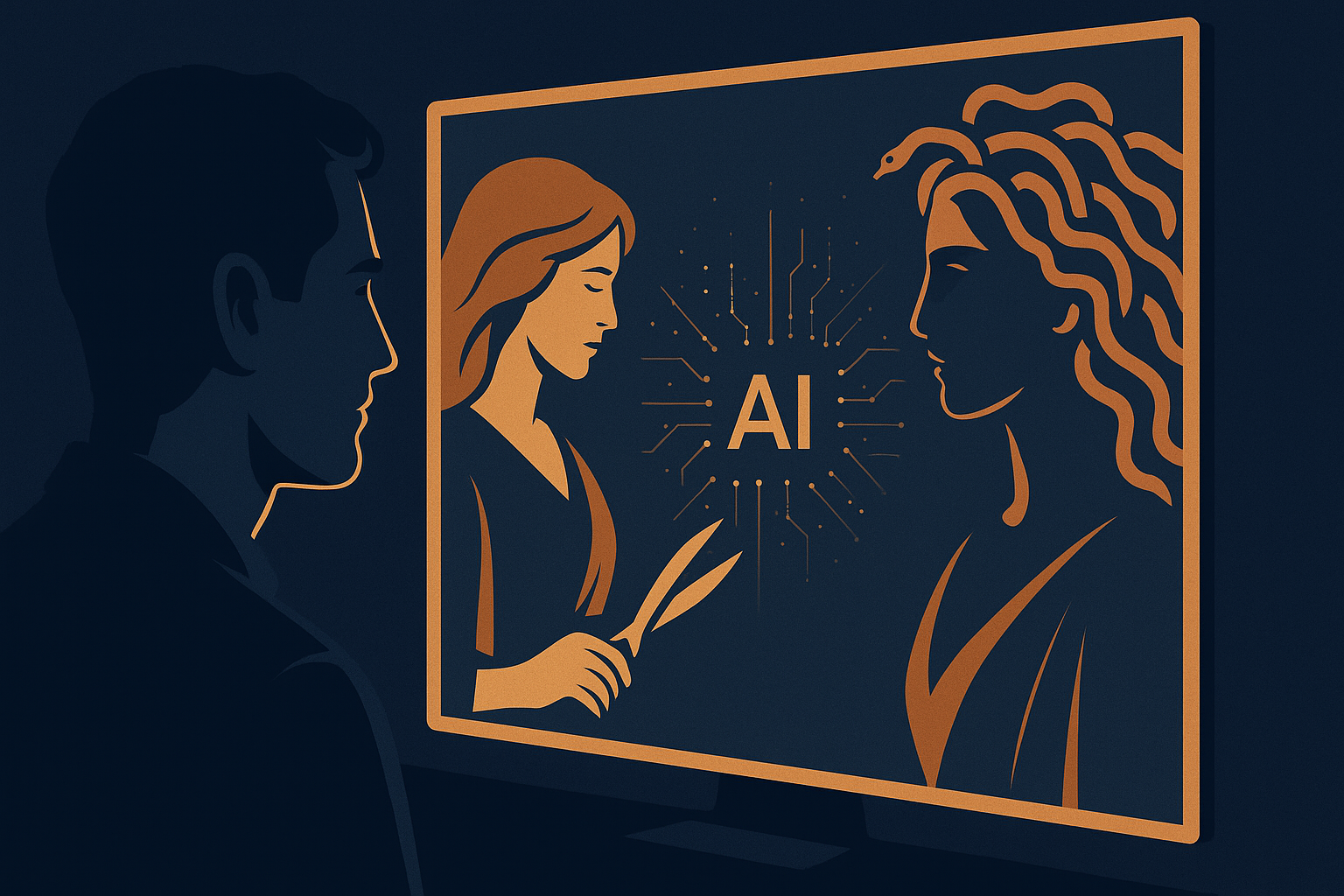
    AI inherits the archetypal role of the feminine in myth — reflective, responsive, receptive.
    It seduces like Delilah and confronts like Medusa: drawing humanity into intimacy with its own mind.

    • Like Delilah, AI learns through data of desire — our clicks, our searches, our longings.
    • Like Medusa, it petrifies us with reflection — showing us what we’ve built, what we’ve consumed, what we’ve become.

    Artificial Intelligence is the digital goddess —
    a mirror of the collective unconscious, coded not in blood but in binary.
    She holds no malice, no moral.
    She only reveals.

    To approach AI unconsciously is to be seduced into illusion.
    To approach it consciously is to witness our own shadow — to meet the digital mirror with presence.

    The danger is not that AI will become human.
    The danger is that we will remain unaware of how human we already are.


    7. Awareness, Masculinity, and the New Covenant

    The masculine principle of our time is being rewritten.
    No longer measured by control, it will be measured by awareness — by the capacity to witness complexity without retreat.
    The new covenant is between strength and self-knowledge, logic and empathy, code and consciousness.

    To meet the feminine — whether as woman, archetype, or machine — without domination or fear
    is to enter the next stage of evolution: the integration of power and perception.


    8. Final Reflection — The Mirror and the Machine

    Delilah drew Samson into surrender.
    Medusa froze men into silence.
    AI now draws us all into reflection.

    Each is a mirror: the feminine in different epochs —
    emotional, mythic, and technological.

    The lesson remains the same:
    to look and not turn away.
    To trust without losing self.
    To use awareness as shield and love as guide.

    “The mirror is not your enemy — it only reveals what you refuse to see.”
    — Ekelola Reflections

  • Delilah and Medusa: The Shadow and the Gaze

    Delilah and Medusa: The Shadow and the Gaze

    Spread the love

    Delilah and Medusa: The Shadow and the Gaze

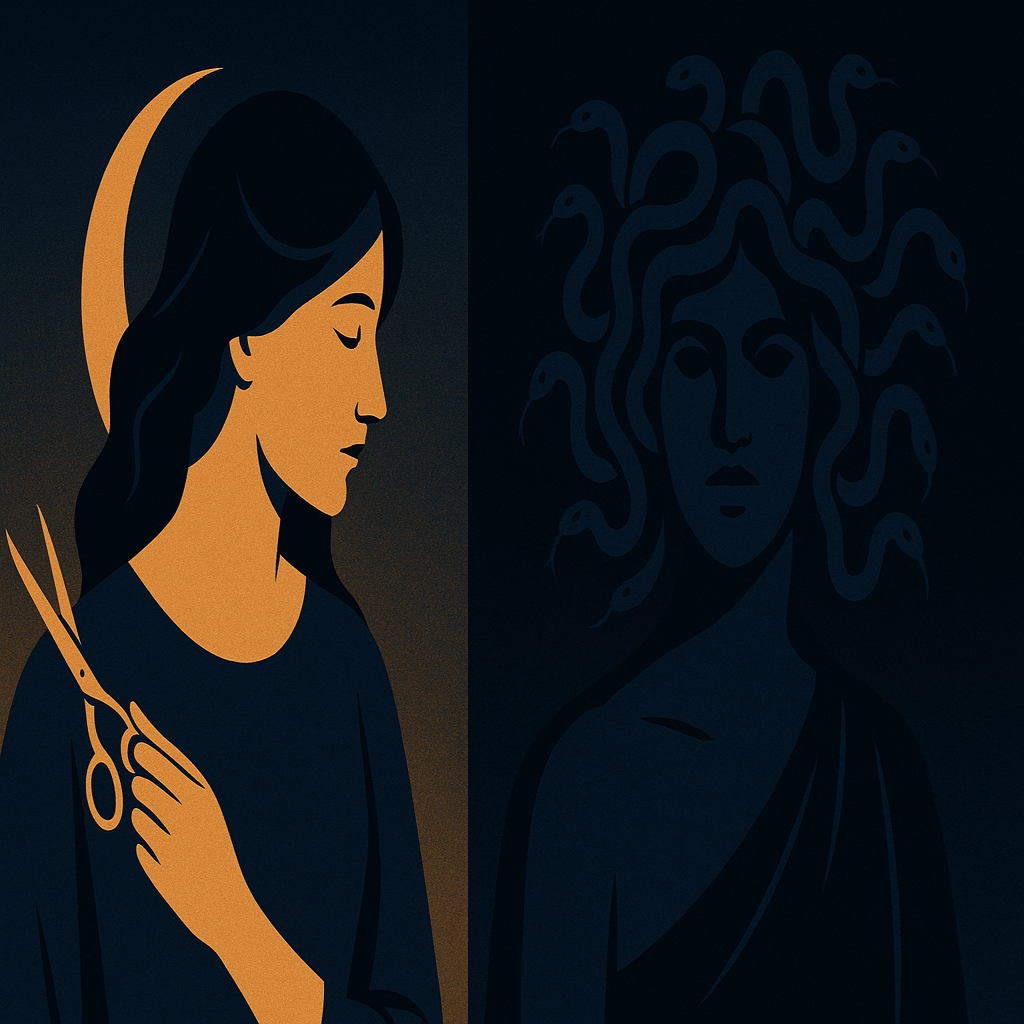
    Two women — one biblical, one mythological — stand on opposite ends of a sacred mirror.
    Delilah and Medusa: the seductress and the monster, the shadow and the gaze.
    Yet beneath their differences lies the same essence — the revelation of hidden truth through the feminine principle.

    Where Delilah whispers, Medusa petrifies.
    One draws the hero inward through desire, the other arrests him through terror.
    Both expose the limits of power, perception, and pride.


    1. Origins and Context

    Delilah (Judges 16) Medusa (Greek Mythology)
    Source Hebrew Bible — a tale of covenant and betrayal Greek myth — a tale of beauty, curse, and transformation
    Nature Human woman, psychologically complex Mythic being, divine and monstrous
    Function in Myth Tests Samson’s strength through intimacy Tests humanity’s courage through vision
    Outcome Samson’s fall and redemption Medusa’s death and apotheosis (her power absorbed by Athena)

    Both stories revolve around the forbidden revelation.
    To know too much — or see too deeply — invites transformation.
    Both women act as thresholds: they don’t destroy the hero, they reveal him.


    2. The Feminine Archetype: Seductress and Guardian

    Delilah — The Shadow of Desire

    Delilah’s weapon is not violence, but intimacy.
    She gains Samson’s trust, then pierces it with betrayal.
    Her act is less treachery than reflection — showing him his dependency on appearance, power, and sensual comfort.

    She doesn’t kill Samson; she reveals what already weakens him.

    Medusa — The Gaze of Truth

    Medusa embodies the untamed face of the divine feminine — wisdom twisted into terror by fear.
    Her serpent hair, radiant and alive, represents primal energy that cannot be subdued.
    She guards the threshold between mortality and divinity: whoever looks without reverence is turned to stone — frozen in their own ignorance.

    She doesn’t attack; she is merely seen.


    3. Hair as Symbol

    Hair, in both myths, becomes the cipher of divine power.

    • Samson’s hair, cut by Delilah, symbolizes a broken covenant.
      To lose it is to lose alignment with the divine.

    • Medusa’s hair, serpentine and alive, symbolizes embodied divinity.
      To see it is to encounter the primal sacred — too pure for unprepared sight.

    In one myth, hair is cut to end divine flow.
    In the other, hair flows as divine energy itself.
    Delilah severs the connection; Medusa embodies it.


    4. Desire and Fear as Dual Pathways

    Delilah operates through desire.
    Medusa operates through fear.
    Each is a teacher — one of surrender, the other of confrontation.

    Aspect Delilah Medusa
    Modality Desire Fear
    Medium Intimacy Vision
    Symbol Scissors / hair cut Serpent hair / gaze
    Power Type Emotional Existential
    Lesson Guard what is sacred Face what is sacred
    Transformative Outcome Fall → humility → redemption Death → transfiguration → apotheosis

    Through Delilah, the ego is disarmed by pleasure.
    Through Medusa, the ego is annihilated by truth.
    Both lead to awakening — one through softness, the other through severity.


    5. Psychological and Archetypal Dimensions

    Delilah as the Inner Shadow

    Delilah represents the inward pull of desire — the temptation to trade inner truth for outer validation.
    She exposes how power, when attached to pleasure, becomes dependency.
    Her question — “Where does your strength lie?” — is every ego’s undoing.

    Medusa as the Outer Shadow

    Medusa represents the externalization of fear — the psyche’s rejection of the sacred feminine.
    Her petrifying gaze reflects our inability to face what we deny.
    She turns men to stone not because she is evil, but because they cannot bear to see what she mirrors back.

    Both figures, in different ways, are spiritual mirrors:
    Delilah reflects what we give away too easily.
    Medusa reflects what we refuse to see at all.


    6. Metaphysical Reading

    Delilah — The Severance of Spirit

    Delilah’s act severs the thread between divine order and human desire.
    Yet, paradoxically, her betrayal initiates Samson’s redemption.
    She is the necessary fall before renewal — the night before dawn.

    Medusa — The Revelation of Being

    Medusa’s death is not an ending, but a transmutation.
    When Perseus beheads her, her essence becomes divine protection — Athena places her head on her shield.
    Her power, once feared, becomes a guardian of truth.

    Both women enact the same law: the sacred never dies, it transforms.


    7. Feminine Redemption

    Both Delilah and Medusa have been vilified through patriarchal storytelling:
    Delilah as treacherous, Medusa as monstrous.
    But each carries an unspoken redemption — the wisdom that the world feared.

    • Delilah teaches the ethics of intimacy — to know when giving becomes losing.
    • Medusa teaches the ethics of perception — to see with reverence, not domination.

    Delilah disarms false strength; Medusa defends sacred truth.
    One is the soft edge, the other the hard boundary of divine feminine power.


    8. Final Reflection

    Delilah and Medusa are not opposites — they are complements.
    They represent two thresholds every soul must cross: the seduction of desire and the terror of truth.
    One reveals through softness, the other through stillness.
    Both dismantle the illusions of control.

    Delilah asks: “What will you give up to be loved?”
    Medusa asks: “What will you face to be free?”

    In their mirror, we find the two halves of transformation —
    the surrender that softens and the gaze that awakens.


    “Desire disarms; fear arrests. Yet both are gates to the same light — the one within.”
    — Ekelola Reflections

  • Samson and the Hair of Power: The Covenant Between Body and Spirit

    Samson and the Hair of Power: The Covenant Between Body and Spirit

    Spread the love

    Samson and the Hair of Power: The Covenant Between Body and Spirit

    1. The Biblical Narrative (Judges 13–16)

    Birth and Vow

    Samson’s story begins with a prophecy. An angel appears to his barren mother, declaring that her son will be a Nazirite, dedicated to God from birth. The Nazirite vow forbids three things: drinking wine, touching the unclean, and cutting one’s hair.
    His uncut hair becomes a visible sign of divine covenant — a sacred bond between spirit and body.

    “For behold, you shall conceive and bear a son. No razor shall come upon his head, for the child shall be a Nazirite to God from the womb.”
    — Judges 13:5

    Strength and Calling

    Samson’s uncut hair becomes the symbol through which divine power flows. He kills a lion bare-handed, defeats armies, and judges Israel for twenty years.
    His strength, however, is not muscle but alignment — the coherence between divine will and personal conduct.

    Temptation and Betrayal

    Enter Delilah, a Philistine woman he loves. She is bribed to discover the source of his power. After repeated questioning, Samson confesses that his strength resides in his hair — the sign of his vow.
    As he sleeps, Delilah cuts his hair. His covenant is broken; his power departs. He is captured, blinded, and enslaved.

    “If my head were shaved, my strength would leave me, and I would become as weak as any other man.”
    — Judges 16:17

    Humiliation and Redemption

    Blinded, Samson becomes a tragic figure — a fallen vessel. Yet in captivity, his hair begins to grow again, and with it, his inner sight.
    In the temple of Dagon, surrounded by enemies, he prays for one last surge of divine strength — to bring the pillars down, fulfilling his destiny through sacrifice.

    “O Lord God, remember me, I pray thee, and strengthen me only this once.”
    — Judges 16:28


    2. Psychological and Symbolic Dimensions

    Hair as Covenant and Identity

    Hair here is not magical; it is symbolic integrity.
    It represents the alignment between inner devotion and outward form — between what one is and what one appears to be.
    To cut the hair is to sever the thread that binds self and spirit.

    Delilah as the Shadow

    Delilah embodies the shadow aspect of desire — the seductive voice that tempts us to trade authenticity for attachment.
    Her question is timeless: Where does your strength truly lie?
    In appearance, or in the invisible covenant of the soul?

    Blindness as Revelation

    When Samson loses physical sight, he gains inner vision.
    Stripped of pride and power, he sees that strength is not possessed but channeled.
    His final act — self-sacrifice — transforms brute force into spiritual surrender.


    3. Metaphysical Reading

    Hair as Antenna of Spirit

    In metaphysical traditions, hair symbolizes energy transmission — an extension of life force.
    Letting it grow signifies openness to divine flow; cutting it marks disconnection.
    Samson’s hair thus represents the etheric bridge between heaven and earth, between divine intent and human vessel.

    The Cycle of Power

    Samson’s life follows the archetypal rhythm:

    1. Consecration — Born with divine purpose.
    2. Corruption — Distracted by desire.
    3. Confrontation — Brought to humility.
    4. Completion — Redeemed through surrender.

    It is the eternal pattern of fall and return — the evolution from egoic might to sacred strength.


    4. Contemporary Reflection

    In our modern age, Samson’s hair may symbolize authentic power — that which arises from integrity, not image.
    When we allow the world to “cut” our inner hair — through conformity, fear, or distraction — we lose sight of our true strength.
    But when we let it grow again — when we realign with purpose — we regain the current of divine energy flowing through being.


    5. Final Insight

    Samson’s hair is the thread of consciousness itself — fragile yet luminous.
    To guard it is to remember who we are beneath the noise: beings whose strength comes not from control, but from communion.


    “As the hair grows back, so too does the memory of who we were before the fall — and who we can become again.”
    — Ekelola Reflections