Author: ekelola

  • Grit and the Board: Endurance in Chess, Checkers, and Awale

    Grit and the Board: Endurance in Chess, Checkers, and Awale

    Spread the love

    โ™พ The Invisible Clock Beneath the Board

    In psychology, grit is passion and perseverance for long-term goals.
    Itโ€™s not raw talent, nor fleeting motivation โ€” itโ€™s endurance of intent.

    Grit is what remains when glamour fades,
    what stays standing when applause is gone.

    It is the clock beneath the board โ€” ticking when no one watches,
    measuring not your skill, but your stamina.

    โ™Ÿ Chess: The Discipline of the Infinite

    In chess, grit is the willingness to think again.

    Every blunder whispers, “Start over.”
    Every lost queen tests your composure.
    Every draw against chaos demands humility.

    The gritty player studies their losses as love letters from time itself.
    They donโ€™t seek perfection โ€” they seek persistence.

    A grandmaster isnโ€™t crowned by brilliance alone,
    but by the patience to sit through a thousand quiet humiliations,
    each refining the mind like fire refines gold.

    Chess teaches that grit is not speed of thought, but depth of endurance.
    Each move is an act of faith that meaning can still be restored
    โ€” even when your position is bleeding.

    โฌ› Checkers: The Courage to Keep Moving Forward

    Checkers simplifies the world โ€” red and black, forward and back.
    But within its simplicity hides a profound truth: progress demands risk.

    You canโ€™t move backward until youโ€™ve been kinged โ€”
    a metaphor for the maturity that only loss and repetition can earn.

    Every checker that dares to cross the board must face capture, traps, and sacrifice.
    Yet it presses on, square by square, believing in arrival.

    In checkers, grit is the audacity to keep advancing,
    even when youโ€™ve watched your whole front line fall.

    Because to reach the far side โ€” to become king โ€”
    you must first survive the middle.

    ๐Ÿชถ Awale: The Rhythm of Rebuilding

    In awale (mancala), the board is a living field.
    Seeds move, scatter, and return โ€” the game never truly ends.

    Here, grit isnโ€™t linear โ€” itโ€™s cyclical.
    You sow what you have, even if itโ€™s little.
    You lose your pits, and then gather from others.
    You start again, always with motion, never with despair.

    Grit in awale is the rhythm of rebirth โ€”
    the wisdom that what is taken can be regained,
    and what is empty can be refilled.

    While chess teaches focus, and checkers courage,
    awale teaches faith in continuity โ€” that time, patience, and rhythm
    can turn scarcity into abundance.

    โš– The Triad of Grit

    • Chess reminds us: Think deeply, fail intelligently.
    • Checkers teaches: Advance bravely, even when exposed.
    • Awale whispers: Rebuild patiently, even when emptied.

    Together, they model the three faces of grit โ€”
    discipline, courage, and faith.

    Because grit is not one act of strength,
    but a long conversation with defeat โ€”
    and the decision to keep speaking when the board is silent.

  • Life as a Paradox: The Bibleโ€™s Inversion of Human Logic

    Life as a Paradox: The Bibleโ€™s Inversion of Human Logic

    Spread the love

    The Bible is full of paradoxical truths โ€” not contradictions, but divine reversals that challenge human logic.
    It reveals that the deepest wisdom often lives where reason falters.

    ๐Ÿ•Š The Paradox of Life Through Death

    โ€œWhoever wants to save their life will lose it, but whoever loses their life for my sake will find it.โ€ โ€” Matthew 16:25

    To truly live, one must die โ€” not physically, but to ego, pride, and self-will.
    In dying to self, one becomes alive in God.
    The paradox is that surrender brings gain, and death gives birth to life.

    โš–๏ธ The Paradox of Weakness as Strength

    โ€œMy grace is sufficient for you, for my power is made perfect in weakness.โ€ โ€” 2 Corinthians 12:9

    When human strength fails, divine strength begins.
    Weakness isnโ€™t failure โ€” itโ€™s the opening where grace enters.
    The paradox: dependence is not defeat, but divine access.

    ๐ŸŒฟ The Paradox of Servanthood and Greatness

    โ€œWhoever wants to become great among you must be your servant.โ€ โ€” Matthew 20:26

    In Godโ€™s kingdom, authority is inverted.
    True greatness is found not in domination, but in humility.
    Leaders wash feet, not demand thrones.

    ๐Ÿ’” The Paradox of Joy in Suffering

    โ€œConsider it pure joy, my brothers and sisters, whenever you face trials of many kinds.โ€ โ€” James 1:2

    How can suffering bring joy?
    Because pain refines faith and reveals what endures.
    We find joy not for the pain, but through it โ€” the recognition that suffering births strength.

    ๐Ÿ”“ The Paradox of Freedom in Obedience

    โ€œThen you will know the truth, and the truth will set you free.โ€ โ€” John 8:32
    โ€œTake my yoke upon youโ€ฆ For my yoke is easy and my burden is light.โ€ โ€” Matthew 11:29โ€“30

    The world sees obedience as restraint.
    The Bible sees it as release.
    To submit to truth is to be freed from illusion โ€” obedience becomes liberation.

    ๐Ÿ”„ The Paradox of the First and the Last

    โ€œSo the last will be first, and the first will be last.โ€ โ€” Matthew 20:16

    Divine justice flips worldly hierarchies.
    The overlooked, the humble, the forgotten โ€” they are exalted.
    The proud discover that in heavenโ€™s eyes, status is reversed.

    ๐ŸŒ— The Paradox of Light in Darkness

    โ€œThe light shines in the darkness, and the darkness has not overcome it.โ€ โ€” John 1:5

    Darkness is never absolute.
    Itโ€™s the canvas on which light is revealed.
    Without shadow, we could never see illumination.
    Light needs darkness to be seen.

    ๐Ÿชž The Paradox of Faith and Reason

    โ€œFaith is the substance of things hoped for, the evidence of things not seen.โ€ โ€” Hebrews 11:1

    Faith begins where logic ends.
    To believe without seeing is to trust in the invisible โ€” a paradox that defies the intellect but feeds the soul.
    Faith is the highest form of reason, because it chooses meaning over evidence.

    ๐Ÿ”ฅ Summary: The Biblical Paradox of Life

    Worldly Logic Biblical Paradox
    To live is to preserve yourself To live is to die to self
    Strength means dominance Strength means surrender
    Freedom is self-rule Freedom is obedience
    Suffering is punishment Suffering refines faith
    Greatness is being served Greatness is serving others
    Joy follows comfort Joy transcends circumstance

    ๐ŸŒŒ Conclusion: The Divine Reversal

    The Bible presents life not as a straight line of logic, but as a circle of divine paradox โ€”
    a truth that turns upon itself until meaning is revealed from the other side.

    • Death births life.
    • Weakness hides strength.
    • Losing is winning.
    • Obedience is freedom.
    • Darkness births light.

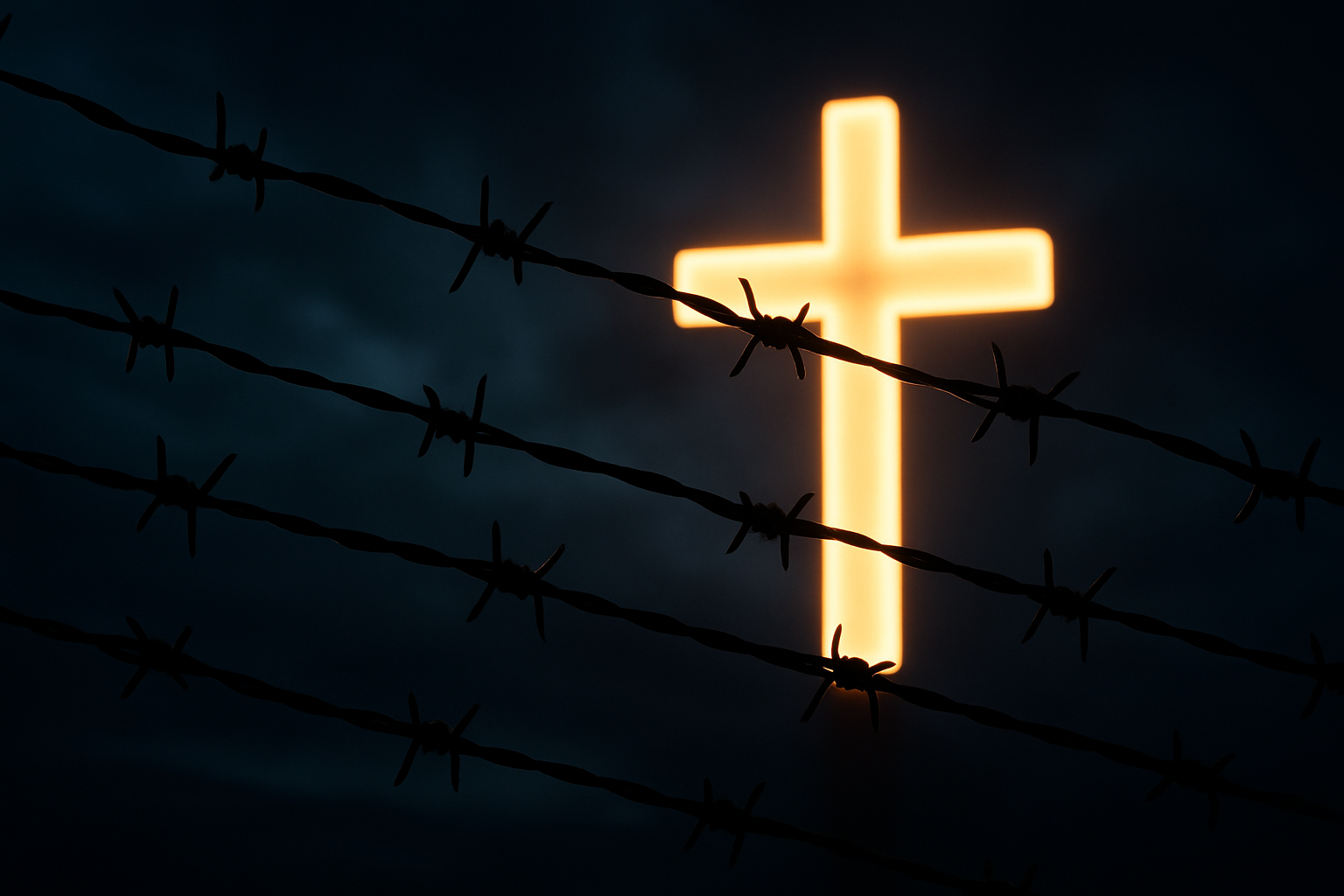
    The cross itself is the ultimate paradox โ€” a symbol of death that became the sign of eternal life.
    In Godโ€™s design, the contradictions of existence are not errors โ€” they are the architecture of truth.

    โ€œFor the foolishness of God is wiser than human wisdom, and the weakness of God is stronger than human strength.โ€ โ€” 1 Corinthians 1:25

  • Apologetics and the Deceptive Heart: A Reflection on Jeremiah 17:9

    Apologetics and the Deceptive Heart: A Reflection on Jeremiah 17:9

    Spread the love

    โ€œThe heart is deceitful above all things, and desperately wicked: who can know it?โ€ โ€” Jeremiah 17:9

    What is Apologetics?

    Apologetics, from the Greek apologia meaning defense or reasoned argument, is the intellectual discipline of explaining and defending the Christian faith.
    It does not mean apology in the modern sense of expressing regret โ€” it means to give a reasoned defense.

    Apologetics stands at the intersection of faith and reason, belief and inquiry, the heart and the intellect.
    It is not about winning arguments; it is about revealing truth.

    The apologist seeks to show that belief in God is not blind emotion, but a coherent, rational response to the reality of existence โ€” a bridge between what we feel and what we know.

    The Problem of the Heart

    When Jeremiah declares that โ€œthe heart is deceitful above all things, and desperately wicked,โ€ he pierces the illusion that humanity is inherently good by nature.

    In this verse, the heart represents the core of human will, emotion, and intention โ€” the seat of identity from which desires, motives, and moral choices arise.
    Jeremiah does not say the heart is occasionally deceitful; he says it is deceitful above all things.

    That expression is profound because it confronts the modern myth of moral neutrality โ€” the belief that humans are naturally good but occasionally corrupted by circumstance.
    Instead, Scripture declares that corruption resides within us, not merely around us.

    This truth is unsettling, yet it forms the foundation of apologetic reasoning: if the heart of man is broken, then the worldโ€™s moral chaos is not random โ€” it is consistent with human nature estranged from its Creator.

    The Heart as an Apologetic

    Jeremiahโ€™s verse is itself an apologetic.
    It explains the contradictions within humanity โ€” the gap between what we know is right and what we do.

    We invent technologies to connect, yet isolate ourselves in loneliness.
    We preach love, yet harbour resentment.
    We crave justice, yet manipulate it to our advantage.
    This paradox is not accidental; it is diagnostic.

    The deceitful heart explains why humanity simultaneously seeks truth and runs from it.
    Our inner deceit is not always malicious โ€” often, it is self-preserving.
    We lie to ourselves to avoid confronting our limitations and our need for redemption.

    In this light, apologetics becomes more than argumentation; it becomes self-examination.
    It begins with understanding why we resist truth even when reason points toward it.
    The Christian apologist therefore does not merely argue for Godโ€™s existence; they expose the moral and emotional barriers that keep humanity from embracing Him.

    The Divine Counterpoint

    If the human heart is deceitful, then divine revelation is merciful.
    Jeremiah 17:10 continues:

    โ€œI the LORD search the heart, I try the reins, even to give every man according to his ways, and according to the fruit of his doings.โ€

    Here, the contrast is striking โ€” God knows what man cannot know about himself.
    Where human introspection fails, divine insight penetrates.
    Where reason ends, revelation begins.

    The apologetic, therefore, culminates not in self-confidence but in surrender.
    Faith is not irrational โ€” it is transrational, rising above the limits of human deceit into divine clarity.

    The Profoundness of “Desperately Wicked”

    The Hebrew phrase translated โ€œdesperately wickedโ€ (สพฤnash) implies incurably sick โ€” a condition beyond self-healing.
    Jeremiah is not condemning humanity but diagnosing a terminal disease: the heartโ€™s moral corruption cannot be cured by intellect, wealth, or philosophy.

    This is where apologetics meets grace.
    No argument, no logic, no moral reform can purify the heart.
    Only transformation โ€” a new heart โ€” as promised in Ezekiel 36:26, can cure the incurable.

    Thus, the ultimate defense of the Christian faith is not proof but person:
    Christ Himself โ€” the Word made flesh โ€” becomes both the argument and the answer.

    Conclusion

    Apologetics begins in the mind but ends in the heart.
    Jeremiahโ€™s verse is not a rebuke but an invitation โ€” to recognize our blindness and turn toward light.
    It calls us to humility: the first step of truth is admitting that our hearts are not reliable witnesses.

    In this sense, to understand Jeremiah 17:9 is to understand the need for apologetics itself.
    For if the heart deceives, then truth must be defended not just against the world โ€” but against ourselves.

    โ€œThe goal of apologetics is not to make the Gospel reasonable โ€” it is to make reason bow before the Gospel.โ€

  • Prompt and Rendering: The Dialogue Between Imagination and Reality

    Prompt and Rendering: The Dialogue Between Imagination and Reality

    Spread the love

    The terms prompt and rendering come up constantly in AI art, design, and video creation โ€” yet they describe two completely different worlds.
    One belongs to the realm of imagination, the other to the realm of manifestation.

    Letโ€™s unpack both sides of this creative dialogue.

    ๐Ÿ—ฃ๏ธ What Is a Prompt?

    A prompt is the instruction, idea, or description you give to an AI model to generate something.
    Itโ€™s your way of telling the machine what to dream about.

    Think of it as:

    โ€œWhat you ask for.โ€

    It defines what you want and sometimes how you want it โ€” style, tone, lighting, perspective, or emotion.

    Examples

    • โ€œGenerate an image of a futuristic city at sunset with flying cars.โ€
    • โ€œWrite a poem about rain and loneliness.โ€
    • โ€œCreate a cinematic b-roll showing a black queen chess piece illuminated by soft golden light.โ€

    The prompt is the seed of intention โ€” the language of your imagination translated into something the machine can understand.

    ๐ŸŽจ What Is Rendering?

    Rendering is the process (and the result) of turning that prompt into something visible or tangible โ€” an image, video, 3D scene, or animation.

    Itโ€™s the moment when the idea takes physical form.

    Think of it as:

    โ€œWhat the machine creates.โ€

    Rendering involves computation โ€” translating the abstract prompt into pixels, frames, and light.

    Examples

    • The final image of that futuristic city.
    • The video clip Runway produces from your text.
    • The animation frames rendered by Blender or Unreal Engine.

    The rendering is the realization โ€” the machineโ€™s interpretation of your intent, filtered through its algorithms, training, and limitations.

    โš™๏ธ How Prompting and Rendering Work Together

    Step Concept Description
    1๏ธโƒฃ Prompting You tell the system what to create โ€” the creative direction.
    2๏ธโƒฃ Rendering The system creates it โ€” producing visuals, motion, or sound.
    3๏ธโƒฃ Refinement You adjust the prompt or rendering settings to move closer to your vision.

    This cycle is the creative feedback loop between human and machine โ€” you imagine, it renders, and you refine.

    ๐ŸŽฌ The Artistic Analogy

    Think of prompting as giving a directorโ€™s note,
    and rendering as the film being shot and edited.

    Or in painting terms:

    • Prompt โ†’ The idea you describe to the artist
    • Rendering โ†’ The painting itself, brought to life with strokes and color

    Prompting is imagination articulated.
    Rendering is imagination materialized.

    ๐Ÿ” How They Approach Problem Solving

    While both prompting and rendering contribute to creative problem-solving, they do so through different philosophies of thought and action.

    ๐Ÿงฉ Prompting: The Conceptual Problem Solver

    Prompting operates in the abstract domain โ€” it solves problems through language, framing, and exploration of meaning.
    The challenge here is clarity: expressing intent so precisely that the model understands the essence of your goal.

    A good prompt doesnโ€™t just describe โ€” it guides reasoning.
    Itโ€™s about problem definition, not execution.

    A strong prompt is like a hypothesis โ€” it sets the stage for discovery.

    Prompting asks:

    โ€œWhat do I want to achieve, and how can I describe it most effectively?โ€

    โš™๏ธ Rendering: The Technical Problem Solver

    Rendering, on the other hand, operates in the mechanical domain โ€” it solves problems through calculation, optimization, and iteration.
    It deals with the constraints of reality: resolution, frame rate, lighting, computation, or style fidelity.

    Where prompting explores what is possible, rendering decides what is feasible.

    Rendering is like engineering the bridge that imagination designed.

    It transforms intent into implementation, ensuring the abstract vision can exist within the limits of algorithms and energy.

    ๐Ÿง  Together: The Full Spectrum of Creative Problem Solving

    Dimension Prompting Rendering
    Domain Abstract / Conceptual Concrete / Technical
    Goal Define the vision Realize the vision
    Challenge Clarity of expression Fidelity of execution
    Failure Mode Misunderstanding Artifacts or errors
    Strength Exploration, ideation Precision, completion

    Together, they form the yin and yang of creativity:
    the thinking and the making, the word and the world, the idea and its echo.

    ๐Ÿ’ก Final Reflection

    The prompt is your voice.
    The rendering is the echo that returns.

    The beauty โ€” and the challenge โ€” lies in the space between the two:
    the translation of human imagination into machine interpretation.

    And in that space, something magical happens โ€”
    the birth of art that neither you nor the machine could have created alone.

  • Assertiveness and Politics: How Communication Mirrors Power

    Assertiveness and Politics: How Communication Mirrors Power

    Spread the love

    ๐Ÿงญ Assertiveness and Politics

    How Communication Mirrors Power

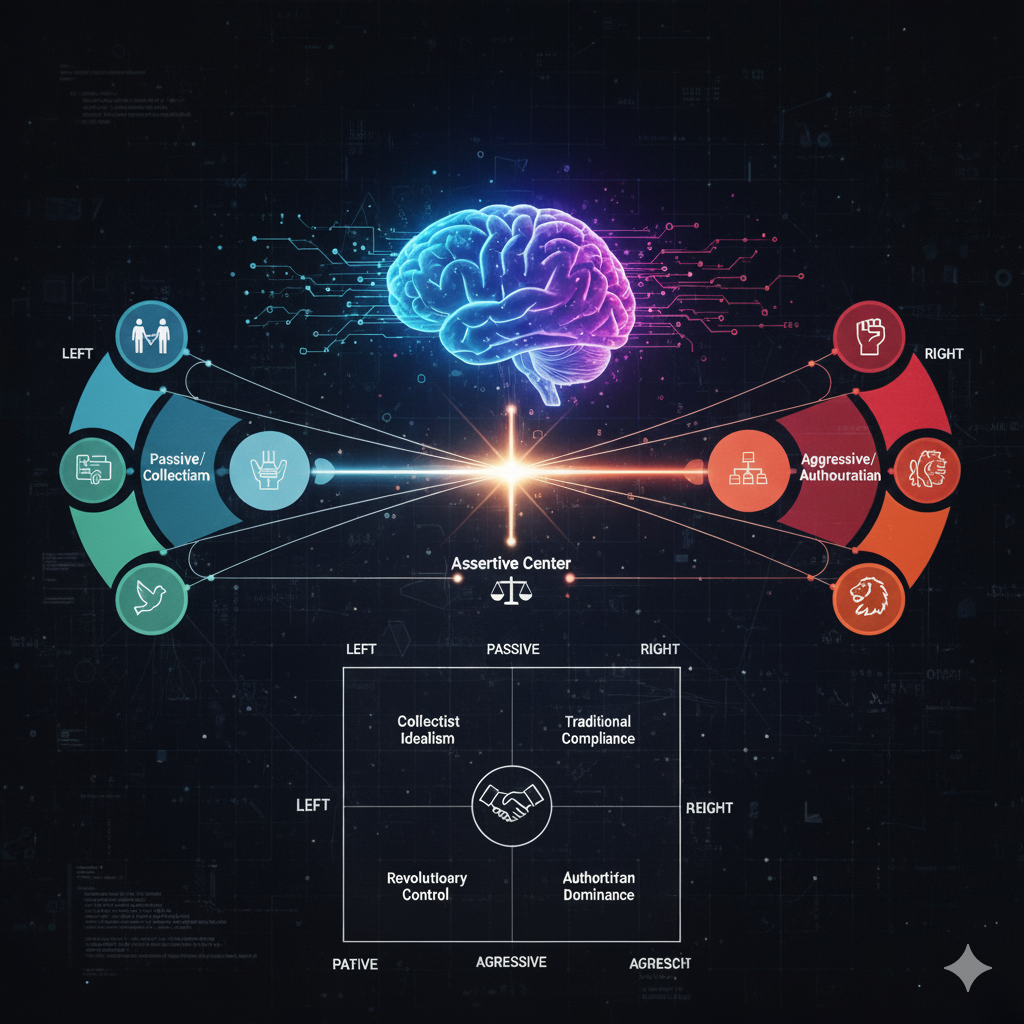
    Both communication style and political ideology are ways of expressing power.
    One acts on the personal scale, the other on the collective scale.
    Both answer the same question:

    How should we express control โ€” through silence, dialogue, or domination?

    ๐Ÿ—ฃ The Assertiveness Spectrum

    Style Core Belief Typical Behavior Emotional Core
    Passive โ€œMy needs donโ€™t matter.โ€ Avoids conflict, defers to others Fear, insecurity
    Passive-Aggressive โ€œIโ€™ll resist without open confrontation.โ€ Sarcasm, indirect defiance Resentment
    Assertive โ€œMy needs matter, and so do yours.โ€ Direct, balanced, respectful communication Confidence, fairness
    Aggressive โ€œMy needs matter more than yours.โ€ Domineering, confrontational Anger, control

    ๐Ÿ› The Political Spectrum

    Orientation Core Belief Expression of Agency Emotional Core
    Left Collective empowerment, redistribution of power Prioritizes equality, empathy, and reform Compassion, idealism
    Center Pragmatic balance between individual and collective Negotiates compromise Realism, moderation
    Right Individual empowerment, preservation of hierarchy Prioritizes order, tradition, and autonomy Pride, fear of disorder

    ๐Ÿงฉ The Analogy

    Both spectrums reflect how people and societies manage power and conflict.

    Assertiveness Style Rough Political Analogue Similarities
    Passive Extreme Left (utopian collectivism) Sacrifices individual agency for harmony
    Passive-Aggressive Cynical Populism or Centrist Frustration Avoids confrontation, resists indirectly
    Assertive Liberal Center / Balanced Reformist Left or Right Seeks dialogue, balance, and fairness
    Aggressive Extreme Right (authoritarian conservatism) Dominance, control, and enforcement of order

    ๐Ÿงญ Assertivenessโ€“Politics Matrix

    โ”€โ”€โ”€โ”€โ”€โ”€โ”€โ”€โ”€โ”€โ”ผโ”€โ”€โ”€โ”€โ”€โ”€โ”€โ”€โ”€โ”€โ”€โ”€โ”€โ”€โ”€โ”€โ”€โ”€โ”€โ”€โ”€โ”€โ”€โ”€โ”€โ”€โ”€โ”€โ”ผโ”€โ”€โ”€โ”€โ”€โ”€โ”€โ”€โ”€โ”€โ”€โ”€โ”€โ”€โ”€โ”€โ”€โ”€โ”€โ”€โ”€โ”€โ”€โ”€โ”€โ”€โ”€โ”€โ”ค
    LEFT โ”‚ โ”‚ โ”‚
    โ”‚ โ˜ฎ๏ธ Collectivist Idealism โš’๏ธ Revolutionary Control โ”‚
    โ”‚ – Empathy over agency – Power justified by ideologyโ”‚
    โ”‚ – Avoids conflict – “For the people” by force โ”‚
    โ”‚ – Sacrifices self for harmony – Imposes equality harshly โ”‚
    โ”€โ”€โ”€โ”€โ”€โ”€โ”€โ”€โ”€โ”€โ”ผโ”€โ”€โ”€โ”€โ”€โ”€โ”€โ”€โ”€โ”€โ”€โ”€โ”€โ”€โ”€โ”€โ”€โ”€โ”€โ”€โ”€โ”€โ”€โ”€โ”€โ”€โ”€โ”€โ”ผโ”€โ”€โ”€โ”€โ”€โ”€โ”€โ”€โ”€โ”€โ”€โ”€โ”€โ”€โ”€โ”€โ”€โ”€โ”€โ”€โ”€โ”€โ”€โ”€โ”€โ”€โ”€โ”€โ”ค
    RIGHT โ”‚ โ”‚ โ”‚
    โ”‚ ๐Ÿ•Š Traditional Compliance ๐Ÿฆ… Authoritarian Dominance โ”‚
    โ”‚ – Defers to hierarchy – Enforces hierarchy โ”‚
    โ”‚ – Preserves order quietly – Sees power as right โ”‚
    โ”‚ – Stability over change – Obedience as virtue โ”‚
    โ””โ”€โ”€โ”€โ”€โ”€โ”€โ”€โ”€โ”€โ”€โ”€โ”€โ”€โ”€โ”€โ”€โ”€โ”€โ”€โ”€โ”€โ”€โ”€โ”€โ”€โ”€โ”€โ”€โ”ดโ”€โ”€โ”€โ”€โ”€โ”€โ”€โ”€โ”€โ”€โ”€โ”€โ”€โ”€โ”€โ”€โ”€โ”€โ”€โ”€โ”€โ”€โ”€โ”€โ”€โ”€โ”€โ”€โ”˜

    โš–๏ธ The Center โ€” The Assertive Zone

    At the heart of both spectrums lies balance.

    Assertiveness is the psychological center; liberal democracy is the political center.
    Both rely on:

    • Respectful dialogue
    • Boundaries without violence
    • Mutual recognition of dignity

    They represent the art of disagreement without destruction.

    ๐Ÿ”„ The Circular Spectrum

    PASSIVE-LEFT โ†’ ASSERTIVE-CENTER โ†’ AGGRESSIVE-RIGHT
    โ†‘ โ†“
    PASSIVE-RIGHT โ† ASSERTIVE-CENTER โ† AGGRESSIVE-LEFT

    Each quadrant reflects both temperament and ideology:

    • Aggressive Left โ†’ Revolutionary, authoritarian equality
    • Aggressive Right โ†’ Nationalist, militaristic order
    • Passive Left โ†’ Utopian collectivism, harmony over autonomy
    • Passive Right โ†’ Obedient traditionalism, stability over change
    • Assertive Center โ†’ Dialogue, balance, reform, and realism

    ๐Ÿชž Reflection

    Assertiveness is to communication what centrism is to politics โ€”
    the art of balancing self-expression with respect for others.

    Move too far in any direction, and dialogue collapses into domination, resentment, or silence.
    The healthiest societies, like the healthiest individuals, learn to speak firmly without shouting, and to listen without surrendering.

    ๐Ÿง˜ Closing Thought

    Power, like speech, is only meaningful when shared in dialogue.
    The moment we stop listening โ€” whether as people or nations โ€”
    we stop being free.

  • No Rest for the Wicked: Restlessness, Reason, and the Human Condition

    No Rest for the Wicked: Restlessness, Reason, and the Human Condition

    Spread the love

    “There is no peace,” says the Lord, “for the wicked.” โ€” Isaiah 57:21

    We’ve all heard it. Usually from someone half-joking, half-sighing over their to-do list:
    “No rest for the wicked.”
    What began as a thunderous biblical warning has become a coffee-fueled meme of modern busyness โ€” ironic, wry, and strangely comforting.
    But beneath the grin lies something older, heavier, and profoundly human.

    ๐Ÿ”น Origins in Scripture

    The phrase comes from the Book of Isaiah, where the prophet warns that those who defy divine law will find no peace:

    “But the wicked are like the troubled sea, when it cannot rest.” โ€” Isaiah 57:20

    In its early sense, no rest for the wicked meant eternal turmoil โ€” not insomnia from emails, but damnation itself. By the 1500s, preachers like John Calvin used it to describe the moral unease of a sinful soul.
    The wicked are not punished with fire โ€” they are punished with restlessness.

    Fast-forward five centuries and the same phrase sits comfortably in everyday speech, tucked between caffeine and complaint.
    “I’ve got another shift tonight โ€” no rest for the wicked!”
    A line of scripture turned self-mockery โ€” theology turned small talk.

    ๐Ÿ”น The Modern Irony โ€” or Is It?

    In today’s vernacular, the saying is playful: a badge of busyness, not of sin.
    It’s how we laugh at our exhaustion. But the joke may hide a mirror.

    If we’re always busy, always hustling, never resting โ€” does that not make us a little “wicked”?
    The biblical wicked were driven by guilt and greed. The modern wicked are driven by deadlines and dopamine.
    The treadmill has changed, but the treadmill remains.

    Psychologists would call it a feedback loop of restless ambition โ€” a constant need for movement to avoid stillness, because stillness would mean facing ourselves.
    So perhaps the irony is misplaced. Maybe we’re not mocking the phrase at all. Maybe we’re living it.

    ๐Ÿ”น The Paradox of Restlessness

    Saint Augustine once wrote,

    “Our hearts are restless until they rest in You.”

    That line could apply to every restless epoch โ€” from monks to marketers.
    Even the righteous, says the Jewish Pirkei Avot, find no rest, for once a good deed is done, they seek another.
    The wicked can’t sleep for guilt; the righteous can’t sleep for responsibility.
    In between lies the modern human โ€” anxious, caffeinated, chasing meaning through metrics.

    Perhaps “no rest for the wicked” was never about punishment, but about being human at all.
    To live is to strive โ€” to be caught between desire and duty, silence and noise.

    ๐Ÿง  Golf and Psychology โ€” The Restless Swing

    Golf, that tranquil war with oneself, might be the purest metaphor for moral restlessness.
    A golfer stands still, yet the mind races:
    Don’t hook. Don’t miss. Don’t embarrass yourself.

    The course looks peaceful, but inside, a hurricane.
    One wicked slice and your inner critic wakes up, yelling from the rough.

    Sports psychologists teach players to forget the last shot โ€” to find stillness in the storm.
    But like the wicked in Isaiah, the mind “cannot rest.”
    Even the pros admit: golf is 90% mental, 10% punishment.

    In this sense, the “wicked” are not evil โ€” they’re just too awake.

    โšฝ Soccer and Philosophy โ€” The Moral Game

    Soccer is democracy in motion โ€” everyone equal in chaos.
    Ninety minutes, no rest, no pause.
    A single lapse and the universe (or the opposing striker) punishes you.

    Camus, the philosopher-goalkeeper, once said:

    “Everything I know about morality and the obligations of men, I owe to football.”

    A “wicked” team may dive, foul, or cheat its way ahead โ€” but time, like karma, adds stoppage time.
    Even the crowd feels it: a moral rhythm pulsing through every pass and penalty.
    The game, like life, rewards awareness, teamwork, and patience.
    And when the final whistle blows, the tired are the just.

    ๐ŸŸฅ Checkers and Democracy โ€” The Vigilance of Equality

    In checkers, every piece begins equal, every move limited โ€” a miniature republic on a board.
    But equality alone doesn’t grant peace; it demands vigilance.
    Turn your gaze away, and a rival will jump your piece.

    Democracy is the same:
    eternal vigilance is the price of liberty.
    The “wicked” โ€” those who manipulate, cheat, or corrupt โ€” find no rest because the system itself is built to expose them.
    And yet, neither do the good.
    The citizen, like the checker, must always move โ€” one square at a time โ€” to maintain the balance.

    Democracy, like checkers, offers no passive victory.
    It lives in motion, not in rest.

    โ™Ÿ Chess, Language, and the Limits of Understanding

    Nowhere is “no rest for the wicked” more alive than in chess โ€” and more revealing than in language.

    In chess, every piece, rule, and possibility is perfectly known.
    No deception, no ambiguity, no politics โ€” only clarity and consequence.
    Two players, one board, one truth: checkmate.
    It’s a rare human space where perfect information exists.

    Language, however, is the opposite game.
    Every word is a piece that moves differently depending on who plays it.
    Tone, culture, memory โ€” each adds layers of distortion.
    We say the same words, but they land on different squares in the mind.
    And so, like mismatched chess engines running on incompatible code,
    humans argue not because we disagree โ€” but because we misunderstand.

    When Isaiah said, “no peace for the wicked,” he spoke a truth wrapped in metaphor,
    and for centuries, humanity has wrestled with what he meant.
    Is wickedness moral decay, or inner unrest? Is rest literal, or spiritual?
    Our language, by its very nature, cannot hold the entire meaning โ€”
    it leaks, it bends, it loses fidelity.
    We invent metaphors to patch the cracks,
    but the cracks themselves are part of being human.

    In chess, one truth; in language, infinite interpretations.
    Between those two lies all our conflict โ€” political, philosophical, personal.
    There is no rest for the wicked,
    because wickedness may simply mean this:
    to be trapped in language, forever chasing perfect understanding,
    and never quite finding it.

    ๐Ÿชถ Reflection โ€” The Moral Restlessness of Being

    “No rest for the wicked” survives because it names something eternal:
    the friction between knowing what’s right and doing what’s possible.

    It’s the email you shouldn’t have checked, the thought you can’t quiet, the conscience that refuses to sleep.
    In every age, in every arena, the human soul spins between action and stillness.

    And maybe that’s not a curse.
    Maybe restlessness is what keeps us from stagnation โ€” what keeps us moral, aware, alive.

    Until then, we’ll keep saying it with a grin and a sigh:
    No rest for the wicked.
    Now back to work. ๐Ÿ˜ˆ๐Ÿ’ค